Creativity, Control, and the Acceptable Ways to Make a Mess
 Wendy Apple
A Personal History of Expression
Long before I thought of myself as a creative person, I thought of myself as a disciplined one. Order, structure, and control were the ways I made sense of the world.
As a child, I was neat, clean, and highly organized. My room was always in order—hyper-organized, really. Everything had a place, and everything stayed there. At the time, it felt like preference. Looking back, I can see it more clearly for what it was: a way of feeling safe. A way of exerting control in a world that often felt unpredictable.
Control was how I coped.
At the same time—and this is important—my inner world was anything but quiet. Inside, there was constant movement, curiosity, imagination, and emotion. That energy had to go somewhere. And it did—just not in ways that disrupted the order I relied on.
I’ve been a baker since I was eight years old. By my teens, I was baking bread for my family. I learned needlework. I sewed. I quilted. I wrote. I tended houseplants. I made things with my hands.
I was always creative.
But my creativity flowed through channels that were structured, useful, and socially welcomed. Who doesn’t like homemade cookies? Bread is comforting. Quilts are practical. A tidy garden is admired. These forms of creativity were not only acceptable—they were praised.
They allowed my inner world to express itself without threatening the external order I depended on. Looking back, I can see how carefully balanced that arrangement had become.
I exerted tremendous control on the outside while allowing creativity to bubble safely on the inside—contained, productive, and non-disruptive. Art, baking, and writing became both expression and regulation. They soothed the nervous system while keeping chaos at bay.
This mattered more than I knew at the time.
As life grew more complex—through grief, illness, and loss—the balance I had maintained between control and acceptable creativity became harder to sustain. Control began to fail me. The structures that once kept me steady could no longer hold everything I was carrying. And creativity, while still present, needed a different outlet.
This is where drawing entered my life in a new way, offering something the structures I relied on could no longer provide.
Unlike baking or sewing, drawing does not have a built-in purpose. It doesn’t feed anyone. It doesn’t keep you warm. It doesn’t have to be tidy, efficient, or admired. It can be messy. It can be unfinished. It can exist without justification.
That was unfamiliar territory for me.
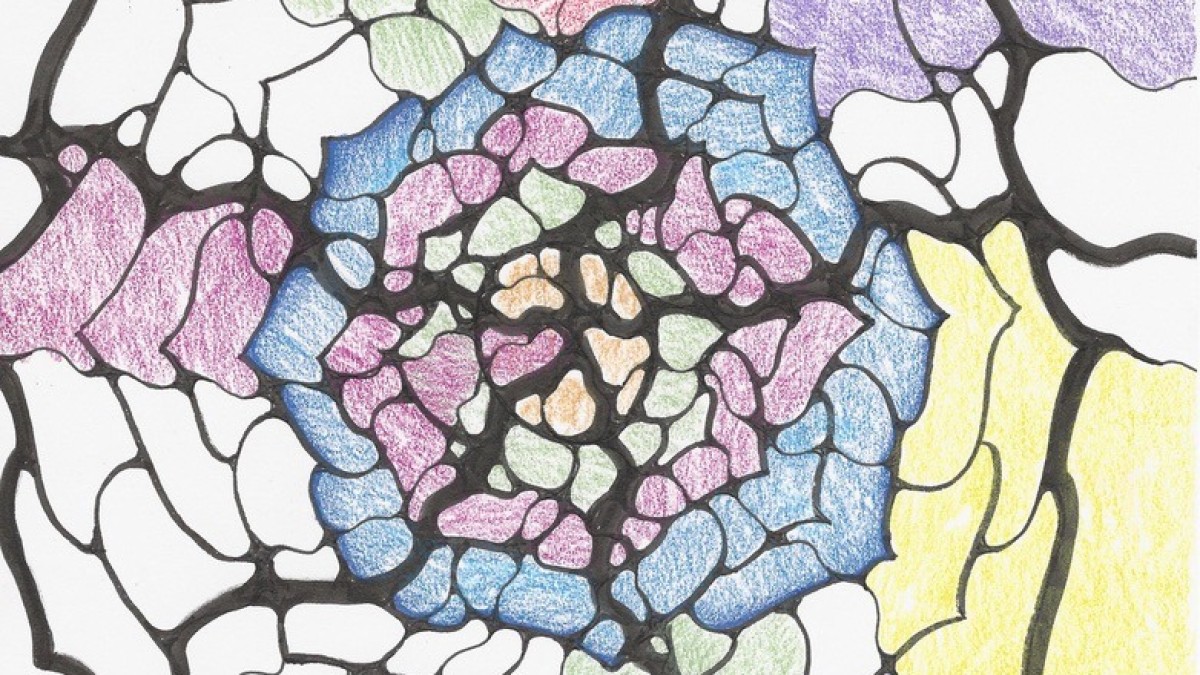
One of the most difficult and liberating moments in my drawing practice came through the catharsis step of the Algorithm for Removing Limitations (ARL): placing a dark, seemingly chaotic mark onto a clean white sheet of paper. At first glance, it can look like nothing more than a scribble. The page is pristine. The marker is permanent. The marks make no immediate sense.
That act can feel deeply unsettling. The page is no longer perfect. Control has been interrupted. But it is also freeing.
That first mark breaks the illusion that the page must remain pure, controlled, or “done right.” It allows whatever is present inside to arrive without translation or polish. And once the page has been marked, something shifts. The fear of ruining it is gone. The work can begin.
Many artists do something similar—adding random marks or loose scribbles to a canvas before beginning formal work. Not out of carelessness, but as an intentional act of release. A way of letting the inner world take the lead and loosening the grip of perfection before anything meaningful can emerge.
Seen this way, the scribble is not chaos. It’s permission.
For someone like me—who learned early that control equals safety—that moment is profound. It is a practice in letting go without falling apart. In trusting that expression does not require order to become meaningful.
In many ways, I had already been learning this lesson elsewhere.
Houseplants were always the exception. Houseplants bring dirt. They bring mess. They bring decay alongside growth. They refuse straight lines and fixed timelines. You can prepare the soil carefully, tend with intention, and still be surprised—sometimes delighted, sometimes frustrated—by what actually emerges.
In hindsight, it makes sense that houseplants mattered to me. They held life, chaos, beauty, and unpredictability all at once. They taught me that growth is not orderly, even when it is healthy. That creation involves mess. That control can guide, but never command.
I see this dynamic clearly in my teaching.
One of the most difficult transitions for many NeuroGraphica students comes after the Basic User course. In the course, students learn the method, the rules, and the guidelines. They learn structure. They learn why and how the method works. There is comfort in that clarity.
And then I ask them to begin releasing the rules. To trust their instincts. To listen to their own inner responses. To draw without checking whether they are “doing it right.”
For some, this is exhilarating. For others, it can be terrifying.
Letting go of control and order can feel like jumping out of a plane and trusting that the parachute will open. Not everyone wants that experience. Not everyone is ready for it. And that’s okay.
This work isn’t about forcing anyone into chaos. It’s about recognizing when structure has done its job—and when holding it too tightly begins to limit growth.
Drawing, especially structured but non-performative drawing, lives right at that edge. There is enough form to feel held, and enough freedom to allow something real to emerge. Like tending a garden—or a houseplant—you can prepare carefully, but you cannot dictate how life unfolds.
In hindsight, all those early creative practices were preparing me for this. Baking taught timing and patience. Needlework taught repetition and focus. Quilting taught how disparate pieces can be joined into something coherent. Gardening taught cycles, seasons, and letting go.
Drawing brings all of that together—while asking less of order and more of trust.
When I teach now, I’m very aware of how many people arrive carrying a similar history. They are competent. Disciplined. Organized. Creative in acceptable ways. And quietly exhausted from holding everything together.
What drawing offers is not chaos. It offers permission. Permission to let the hand move before the mind decides. Permission to make marks that don’t need to be useful. Permission to allow growth that doesn’t follow a straight line.
For someone like me—who learned early that control equals safety—that permission is not trivial. It’s reparative.
Looking back, I don’t see my early need for control as a flaw. It was a strategy. It worked until it didn’t. Creativity was always there, finding the cracks where it could breathe.
I still like tidy rooms and organized spaces, but now I’m learning to let it grow more freely. Not by abandoning structure, but by holding control more lightly and trusting that meaningful growth rarely happens without a little mess.