When Silence Becomes Complicity: Drawing for Peace in Violent Times
 Wendy Apple
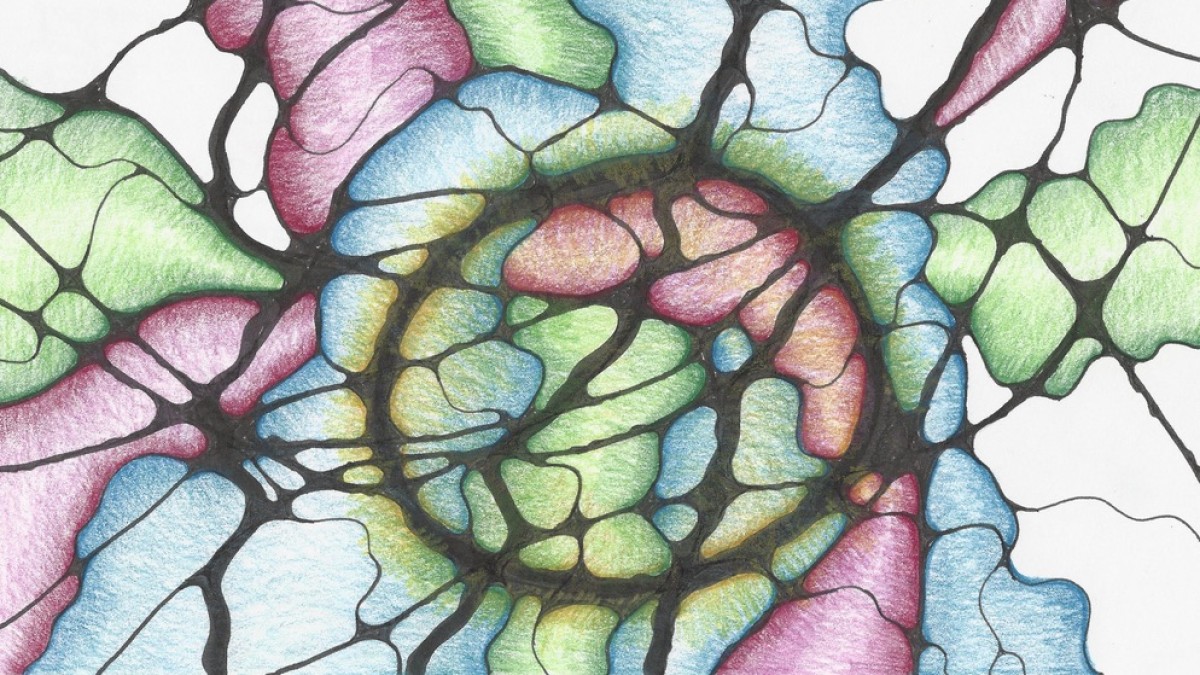
What I’m witnessing, where I stand, and how I’m using NeuroGraphica to stay grounded, coherent, and capable of action in violent times.
When Silence Becomes Complicity: Drawing for Peace in Violent Times
I want to be clear about where I stand.
What we are witnessing right now, through the actions of agencies such as ICE, Border Patrol, and Homeland Security, is state-sanctioned violence against vulnerable people and their fellow citizens. Families are being terrorized and torn apart. Communities are being destabilized. Fear and violence are being used deliberately as tools.
History gives us clear warnings about where this kind of behavior leads.
Small-business owners are often advised to avoid political positions. I understand that advice. But there are moments when silence is not neutrality. It is participation. Right now, Americans are being asked, whether we want to be or not, to choose where we stand.
I choose to stand against violence, dehumanization, and collective punishment.
Violence is not only the use of physical force. It also includes the deliberate creation of fear, the tearing apart of families, and the normalization of harm as “just doing the job.” When systems are designed to intimidate rather than protect, violence becomes routine. That makes it easier to excuse and harder to confront.
Dehumanization is what allows that violence to continue. It happens when people are reduced to categories, case numbers, or political talking points. When language strips people of their stories, relationships, and dignity, harm stops feeling personal. NeuroGraphica teaches us to work against this tendency by restoring wholeness and refusing to flatten lived experience into something abstract.
Collective punishment occurs when entire communities are targeted not because of individual actions, but because they are deemed removable. It functions by casting wide nets, relying on pretext and intimidation rather than due process, and treating entire populations as disposable rather than as human beings with rights. History shows us, again and again, that this does not create safety. It creates trauma that echoes across generations.
I reject all three because they erode the moral fabric of society. They require us to look away from suffering, justify cruelty as order, and accept harm as inevitable. That is not a neutral position. It is a choice.
When practices like this become normalized, when fear replaces accountability and force becomes routine, the foundations of a democratic society begin to weaken quietly. This does not happen all at once. It happens through repeated choices to accept what should never be acceptable.
My choice is to remain aligned with human dignity, even when that alignment is uncomfortable, costly, or unpopular.
I also choose to remain grounded, coherent, and capable of sustained action. That is where NeuroGraphica enters this conversation.
Peace is an Active Practice
Peace is often misunderstood as quiet acceptance or withdrawal. That is not what I mean by peace.
In NeuroGraphica, peace is active. It is what happens when we stay present with tension instead of discharging it blindly. It is what happens when sharpness is integrated instead of denied. Peace, in this sense, is embodied and intentional.
Drawing does not remove our responsibility to respond to injustice. It helps us respond without burning out or becoming destabilized.
When we witness violence, especially systemic violence, it affects the nervous system. Outrage, fear, and grief are physical states, not just ideas. Acting from those states without grounding often leads to exhaustion or fragmentation. The work cannot be sustained that way.
NeuroGraphica gives us a way to work with that activation so it does not run the show.
Why I Draw Before I Act
I do not draw to calm myself so I can look away.
I draw so I can stay clear.
Before I speak publicly, teach, or decide how to engage, I draw to:
- notice where fear is sitting in my body
- see where anger has narrowed my perspective
- regulate my system so my actions come from intention, not impulse
On the page, tension becomes visible. Pressure takes shape. Conflict shows itself. And then the work begins. Not erasing. Not overpowering. Integrating what is actually there.
That process changes how I show up when it is time to speak and act.
From Internal Coherence to External Peace
Inner peace is not the goal.
Coherence is the goal, because coherence shapes the space around us. It changes how we show up and how others respond. It affects our presence, our words, and the impact of our actions.
When we are internally fragmented, pulled between fear, rage, grief, and urgency, we may still act. But our energy scatters. When we are coherent, something shifts. Our presence steadies. Our words land more cleanly. Our actions carry more weight.
Many spiritual and metaphysical traditions describe this as holding space: being physically, emotionally, and mentally present, and creating a safe, non-judgmental, and supportive environment. Peace is created first within us, and then around us.
Peace is not just an emotion. It is a quality of attention. When we cultivate it without denying reality, we contribute something real to the collective field. Love and peace are not abstractions. They shape how interactions unfold, how fear spreads or loosens its grip, and how possibility returns to places hardened by violence.
NeuroGraphica works at this level.
When we integrate internal conflict on the page, we are not just calming ourselves. We are practicing coherence. We are training the nervous system and the imagination to stay open and relational under pressure. From that place, what we project into the world through our voice, our work, and our choices carries a different quality.
This is not magical thinking. It is an acknowledgment that the inner state we bring into action matters. History is shaped not only by force, but by the consciousness behind it.
When we project love and peace from a grounded place, we are not ignoring harm. We are refusing to let harm decide who we become. That refusal, practiced consistently, is one of the ways the world is healed.
NeuroGraphica does not tell us what action to take. It helps us arrive at action that is aligned, ethical, and sustainable.
Drawing as a Form of Resistance
In times like these, drawing can be a form of resistance.
Not because it distracts us, but because it strengthens the capacities required to resist dehumanization: presence, integration, and choice.
Each time you draw instead of dissociating, integrate instead of fragmenting, and regulate instead of collapsing, you preserve something essential: your ability to act with conscience and compassion over time.
I draw because I refuse numbness.
I draw because I refuse cruelty.
I draw because love, when grounded, is not passive. It has direction.
And from that place, I act.
A Closing Invitation
If you are overwhelmed, angry, or frozen, draw first.
Not to make the feelings disappear.
But to make sure your response is rooted in clarity rather than a nervous system hijacked by rage.
Peace is not silence.
Peace is not avoidance.
Peace is what allows us to stand visibly, firmly, and humanely in the face of violence.