Structure, Safety, and the Courage to Let Go
 Wendy Apple
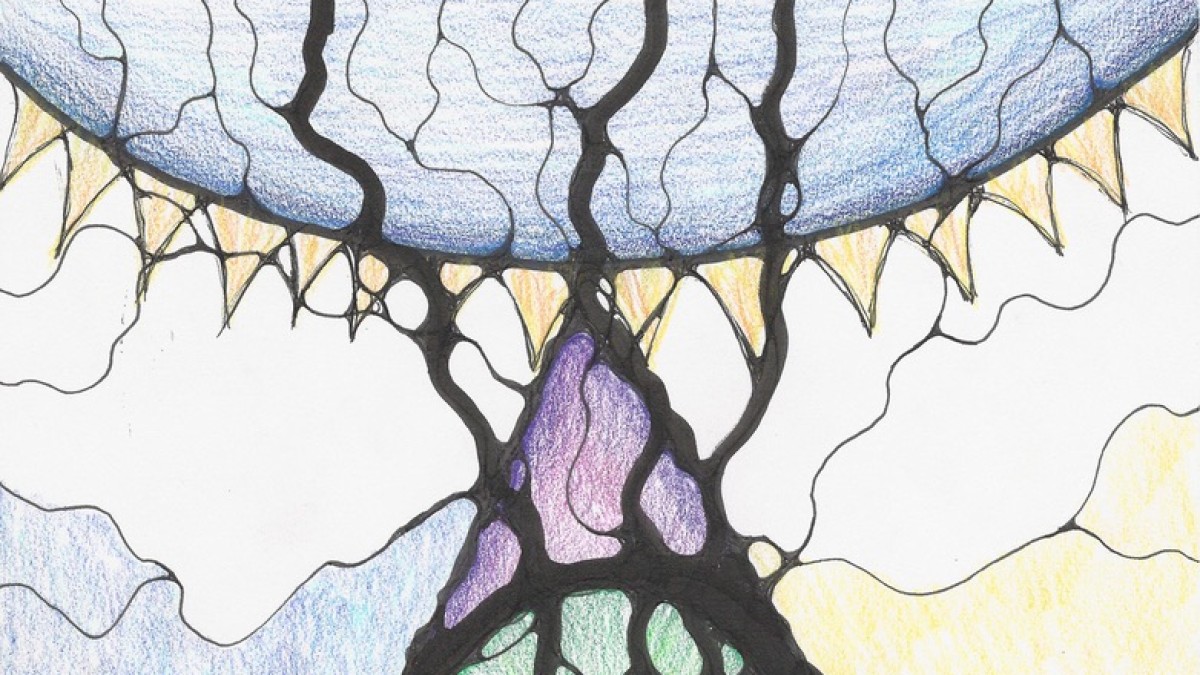
Structure creates safety – but growth begins when we learn to trust the internal guidance that remains after we loosen our grip on it.
Why Some People Stop—and Why That’s Okay
Structure is often misunderstood in creative and personal growth work.
It’s easy to frame structure as restrictive, something creativity must eventually escape. But for many people, structure is not the enemy of creativity. It is what makes creativity possible in the first place. Structure creates safety. Clear guidance reduces anxiety. Knowing what comes next allows the nervous system to relax enough for learning to occur.
This is why the early stages of learning any process matter so much.
In the foundational stages of neuro drawing, students learn the structure, sequence, and underlying principles that support the process. They learn containment and form, along with some of the science behind why and how the process works. For many people, especially those who are competent, responsible, and used to doing things “right”, this clarity is deeply reassuring.
Structure gives them a place to stand. But structure is not meant to be permanent. It is meant to be outgrown.
At a certain point, if growth is going to continue, something else is required. Not more rules. Not more explanation. But trust. This is where the work becomes challenging.
After the foundational courses, I encourage students to begin loosening their grip on the rules. To notice their own instincts. To listen to sensation rather than instruction. To draw without constantly checking whether they are doing it correctly.
For some people, this transition feels exhilarating. For others, it feels like standing at the open door of a plane.
Letting go of external structure can feel reckless, even dangerous. The nervous system wants reassurance. The mind wants guarantees. Beneath it all is a simple and very human question: What if I let go - and nothing catches me?
This isn’t a fear to dismiss.
For many people, control has been a survival strategy. Order has kept life manageable. Rules have provided protection. Asking someone to release those supports is not a small request. It requires courage, self-trust, and a tolerance for uncertainty.
And not everyone wants, or needs, to make that leap. This is something I say clearly and without judgment: This work is not for everyone.
Not because it is better or more evolved, but because it asks for a particular relationship with uncertainty. Some people thrive within structure. They prefer clear boundaries and external guidance. There is nothing wrong with that. Staying with structure can be a valid and healthy choice.
Others feel a pull toward something less defined. They sense that the rules have taught them what they can, and now something inside wants to lead.
Neither path is inherently superior.
The mistake is believing that one path should work for everyone.
What I try to offer as a teacher is not pressure, but invitation. An invitation to notice when structure is still supporting growth, and when it has begun to quietly limit it. An invitation to experiment gently with trust, rather than abandoning safety all at once.
This is why structure and process matter.
Structure, when used well, teaches people how to listen. When it has done its job, it becomes internal. The rules don’t disappear. They are absorbed. What once lived outside becomes an inner reference point. What begins as external structure becomes an internal reference point, something you can return to without needing to be told what to do next.
This is the shift I watch for in students.
Not whether they follow instructions perfectly, but whether they are developing an internal sense of timing, pacing, and response. Whether they can feel when something is complete. When to pause. When to continue. When to stop, without needing external validation.
That transition, from external authority to internal guidance, is subtle. It cannot be forced. And it does not happen on a schedule.
Some people arrive there quickly. Some circle it for years. Some decide they are perfectly content where they are. All of those outcomes are valid.
Growth is not linear. It does not look the same for everyone. And it rarely happens by following instructions forever.
In my own life, I have learned that structure is a teacher, but not a home. It gets us started. It keeps us safe long enough to learn. And then, if we are willing, it invites us to trust what we have already been given.
That moment - when you step forward without checking the rulebook one more time - is not about recklessness. It’s about readiness.
And when it comes, you don’t jump because someone tells you to. You jump because something inside you already knows the parachute is there.